What Happens During a Home Energy Audit? (Step-by-Step Guide)
If you’ve ever wondered whether a home energy audit is worth it, you’re not alone. Many homeowners know their home feels inefficient (hot rooms, high energy bills, uneven cooling) but aren’t sure what an audit actually involves or what they’ll get out of it.
A professional home energy audit isn’t just a walkthrough. It’s a structured, data-driven process designed to uncover where your home is losing energy and why.
Here’s exactly what happens during a home energy audit, and how it helps you make smarter decisions about your home.
Step 1: Initial Walkthrough & Problem Review
Every audit starts with understanding your home and your concerns.
Your technician will ask about:
- Hot or uncomfortable rooms
- High energy bills
- Airflow issues
- Past upgrades or repairs
They’ll also do a visual walkthrough of your home, attic, and HVAC system to identify obvious issues.
This step helps focus the audit on the problems that matter most to you.
Step 2: Blower Door Testing (Air Leakage)
One of the most important parts of an energy audit is measuring how much air your home is losing.
A blower door test uses specialized equipment to:
- depressurize your home
- measure total air leakage
- reveal hidden drafts and gaps
This helps identify where conditioned air is escaping and where outside air is entering.
In Arizona homes, this often highlights attic leaks and structural gaps.
Step 3: Thermal Imaging (Finding Hidden Issues)
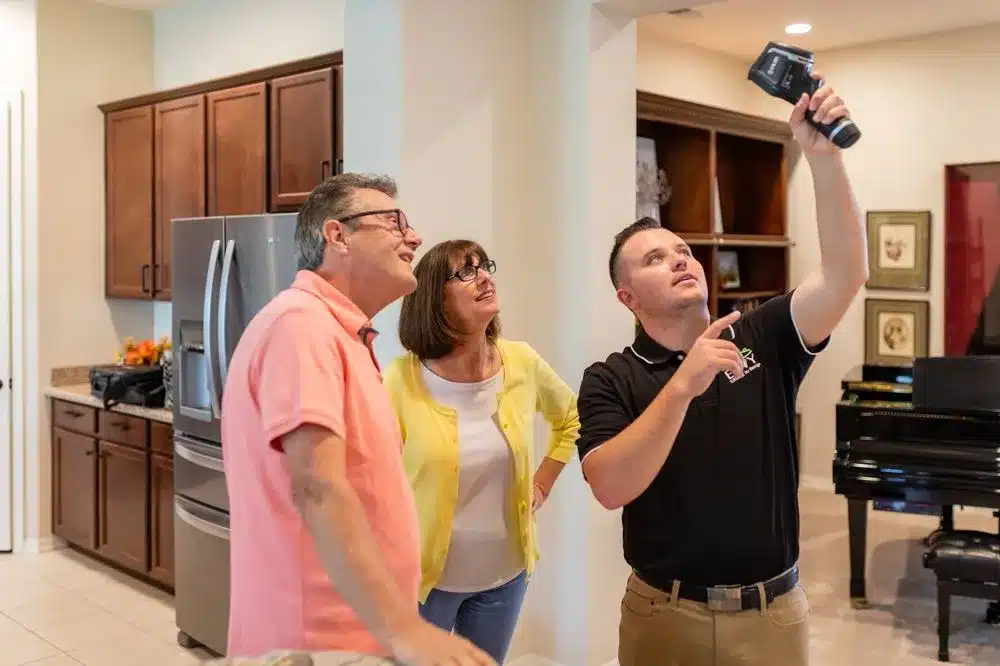
Using an infrared camera, your technician can “see” temperature differences behind walls and ceilings.
This reveals:
- Missing or uneven insulation
- Heat intrusion from the attic
- Hidden hot and cold spots
It’s one of the most effective ways to uncover problems that aren’t visible during a standard inspection.
Step 4: Duct Leakage & Airflow Evaluation
Your duct system plays a major role in comfort and efficiency.
During this step, your technician checks:
- Whether ducts are leaking air
- How well air is being delivered to each room
- Whether airflow is balanced throughout the home
Leaky or poorly designed ductwork is one of the most common causes of uneven temperatures.
Step 5: Attic Inspection & Insulation Assessment
Because Arizona homes are heavily impacted by attic heat, this is a critical part of the audit.
Your technician will:
- Measure insulation depth and coverage
- Look for gaps or compressed insulation
- Evaluate attic heat conditions
Even small insulation issues can have a big impact on cooling performance.
Step 6: Air Quality & Leakage Pathways
Energy audits also look at how air moves through your home.
This includes identifying:
- Pathways where dust or attic air enters
- Leaks around penetrations or openings
- Areas where air sealing could improve comfort
This helps explain issues like dust buildup or stale indoor air.
Step 7: Your Results & Recommended Plan
At the end of the audit, you don’t just get information, you get a clear plan.
Your technician will explain:
- Where your home is losing energy
- What’s causing your comfort issues
- Which improvements will have the biggest impact
Most importantly, recommendations are prioritized so you can focus on what matters first.
No guesswork. No unnecessary upgrades.
How Long Does a Home Energy Audit Take?
Most home energy audits take between 1.5 to 3 hours, depending on the size of the home and the complexity of the issues being evaluated.
Is a Home Energy Audit Worth It?
If your home feels uncomfortable or inefficient, an energy audit is often the fastest way to get real answers.
Instead of spending money on the wrong upgrade, you get:
- clarity on what’s actually wrong
- a prioritized plan
- confidence in your next step
Take the Guesswork Out of Improving Your Home
Most energy problems aren’t obvious; and they rarely have a single cause.
A home energy audit helps you understand how your home actually performs, so you can fix the right problems and get better results.